
Expert Advice From a Luxury Wedding Florist
Planning your wedding flowers is an exciting part of shaping the atmosphere, emotion and aesthetic of your day. With over 30 years in the wedding industry, Flowers by Anya has guided hundreds of couples through this journey — from the earliest questions to the final beautifully styled setting.
This guide brings together the most common questions couples ask when they first begin planning, giving you clarity, confidence and an understanding of what truly matters when designing meaningful, unforgettable florals.
How Much Should We Budget for Wedding Flowers?
Wedding flower budgets vary widely depending on style, scale and venue, but couples are often surprised to learn what luxury florals realistically cost.
A refined, design-led wedding typically begins at:
£1,500–£2,000
For a luxury bridal bouquet, bridesmaids’ bouquets, buttonholes, and a select number of smaller ceremony or reception pieces.
£5,000–£10,000
This range usually includes:
- Large urn or pedestal arrangements
- Floral meadows lining the aisle
- Significant table centrepieces
- Statement entrance pieces
- Mantlepiece or staircase florals
- Focal arrangements that define and elevate key spaces
£15,000+
This level offers a full, immersive floral experience, such as:
- Large-scale arches
- Ceiling and suspended installations
- Sculptural floral features
- Multi-area designs across several rooms
- Richly layered tablescapes
- Transformative, atmosphere-shaping floristry
Luxury floristry is not simply the supply of flowers — it is an artistic and logistical service requiring days (and often weeks) of craftsmanship, design preparation and technical execution.
Your investment also covers:
- Artistic design and creative planning
- Expert labour and specialist techniques
- Flower conditioning and preparation
- Transport and logistics, often across multiple vehicles
- Professional mechanics and sustainable materials
- Skilled onsite installation
- Next-day collection and breakdown
- Insurance, equipment, storage and operational infrastructure
This ensures your wedding flowers are not only beautiful on the day, but executed with precision, safety, artistry and professionalism at every stage.
Luxury flowers are not just an arrangement of blooms — they are the result of artistry, time, sourcing, labour, logistics, premium materials, staff, transport, insurance and bespoke design. You are investing in a full experience, not merely the flowers themselves.
What’s Included in Full-Service Floral Design?
A luxury wedding florist goes far beyond arranging flowers. A full-service experience includes:
- Personalised consultations
- Bespoke design development and moodboard creation
- Colour palette curation
- Sourcing premium, seasonal blooms
- A detailed site visit to assess your venue, architecture and focal points
- Liaising with venues, planners and suppliers
- Delivery, styling and full on-site installation
- Repurposing flowers where appropriate
- Next-day breakdown and collection (same-day only for fast-turnover venues)
Every detail is meticulously handled so your wedding feels seamless, elegant and beautifully cohesive.
Do You Offer Site Visits?
Yes — and they are an essential part of luxury floral design.
A site visit allows your florist to study:
- Natural light
- Architectural lines
- Ceiling height
- Staircases, fireplaces or focal points
- Logistics for installations
- Guest flow
- Ceremony vs reception transitions
This ensures your florals feel integrated with the venue, not simply placed within it.
Which Floral Areas Have the Most Visual Impact?
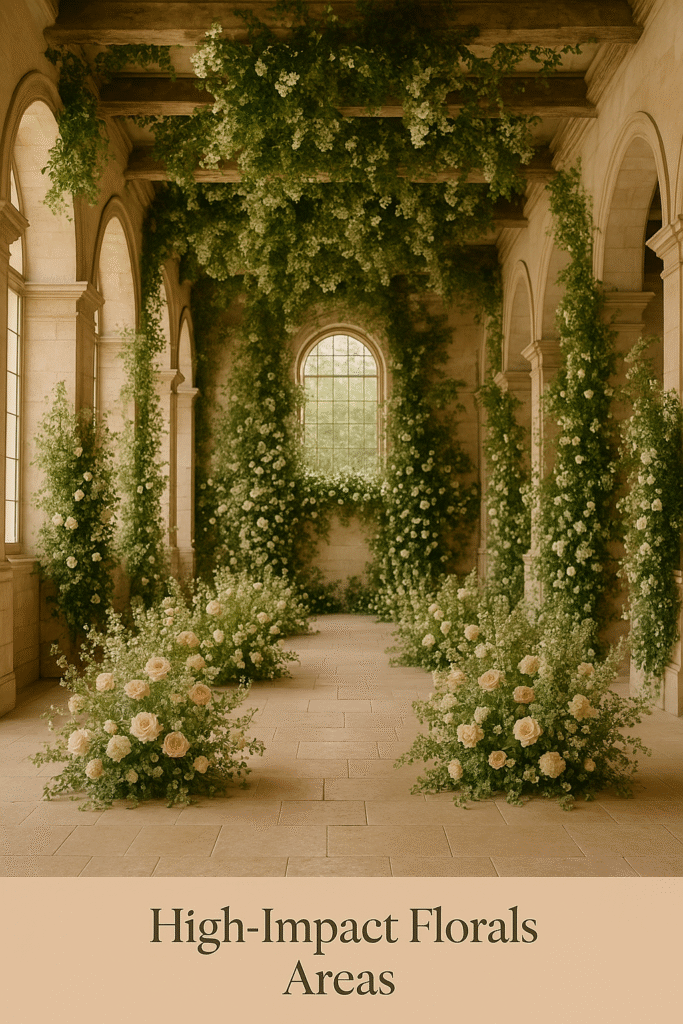
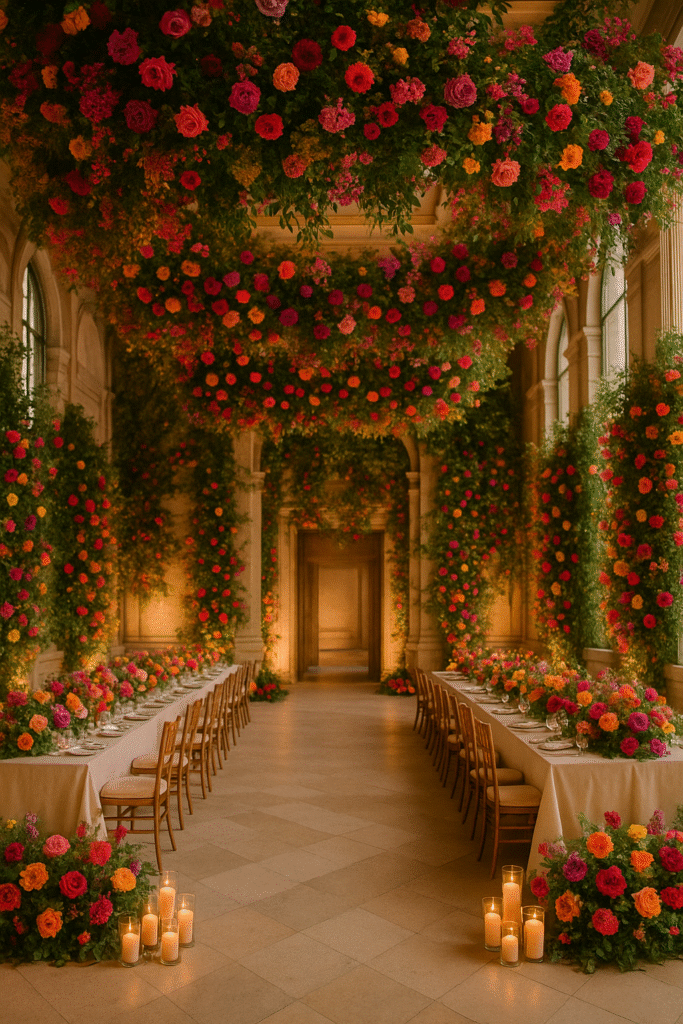
Couples are often surprised by which areas truly shape the guest experience. High-impact areas typically include:
- The ceremony backdrop (arch, meadow, columns)
- Aisle florals
- Statement entrance pieces
- Staircases, fireplaces and architectural installs
- Dining tables and overhead features
- The top table or sweetheart table
These are the moments guests remember — and where photography captures the heart of your celebration.
When Should We Book Our Florist?
For peak dates, couples often book their florist 12–18 months in advance.
Luxury weddings, marquee builds, estate venues, or large-scale installations frequently secure their date even earlier.
It is not uncommon for discerning couples to book florists for 2027–2028 weddings during 2025–2026.
Booking early ensures:
- Your preferred florist is available
- Design time is protected
- Fresh flowers can be sourced at the highest quality
- Your installation is planned with precision
Fresh vs Faux Flowers — What Should We Choose?
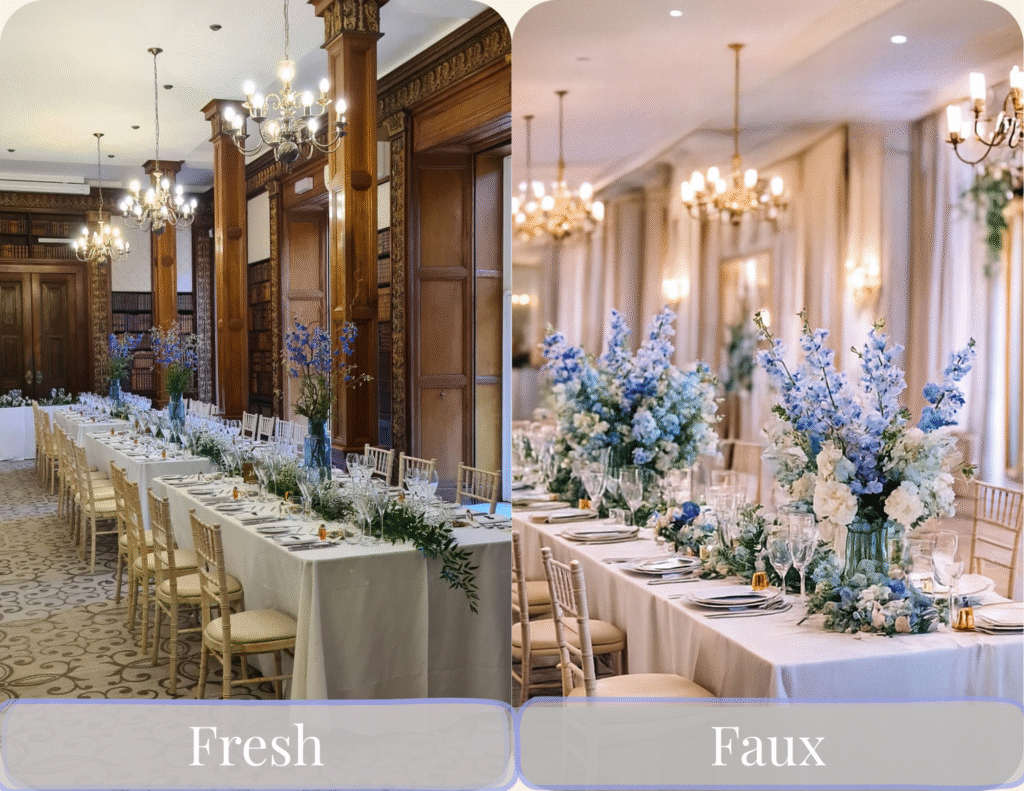
Fresh flowers offer natural movement, fragrance, softness and emotional impact — a sensory experience that transforms a space and lingers in memory.
Faux florals have their place within luxury work when they solve artistic or practical challenges. They are widely used in:
- Large-scale installations
- High heat environments
- Long filming schedules
- Period dramas and historical productions where specific flowers are required for historical accuracy
- Situations where a sentimental flower is unavailable fresh
However, faux florals do not offer the same atmosphere, scent or emotional presence as fresh flowers when viewed close-up.
Many discerning couples choose predominantly fresh florals for this reason, with carefully selected faux elements included only when needed for structural or artistic reasons.
Both mediums have purpose — but each offers a very different experience.
Fresh Flowers
Fresh flowers provide:
- Natural movement
- Authentic luxury
- Depth, softness and subtle imperfection
- Fragrance that evokes emotion
- A multi-sensory atmosphere
- A transformative effect on the space
Fresh florals create memories — the scent, the texture, the romance — all come together to form an experience that cannot be replicated by artificial materials up close.
Faux Flowers
High-quality faux flowers are used in luxury settings when they solve a specific artistic or practical requirement.
They are often chosen for:
- Film and television productions (Regency, Tudor, Medieval dramas such as Bridgerton-style sets), where filming spans months and continuity is essential
- Historical accuracy, when a flower no longer exists in commercial production
- High-heat or restricted environments
- Lightweight overhead installations
- Sentimental flowers that are unavailable fresh
These are not budget faux stems. Premium faux botanicals used in high-end work are often handcrafted for accuracy and longevity.
Which Do We Use?
At Flowers by Anya, fresh florals take centre stage, supported by natural materials such as:
- Dried flowers
- Moss
- Branches (contorted willow, silver birch, oak)
- Preserved foliage
These elements add texture and authenticity to designs inspired by nature.
Faux stems may be incorporated only when:
- A sentimental bloom is unavailable
- A period-accurate flower is needed
- Filming or environmental conditions require it
Fresh florals remain unmatched for emotion, fragrance and atmosphere.
Current Floral Trends Couples Are Asking About
While this guide focuses on the foundations of floral planning, many couples are curious about current design trends. Recent years have seen several strong directions shaping modern weddings:
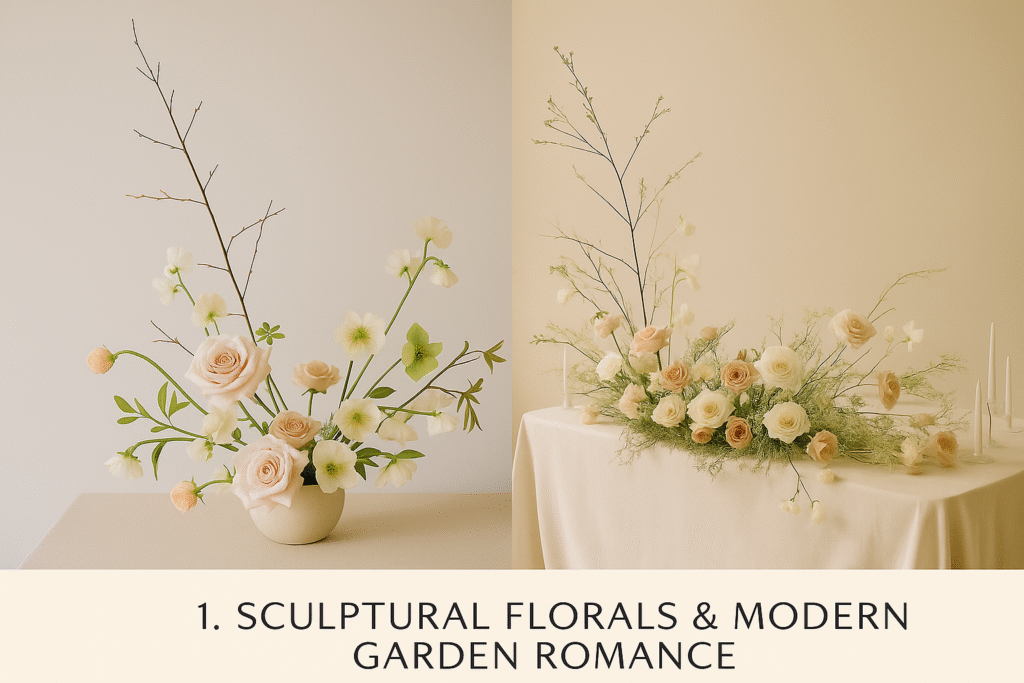
- Sculptural, garden-inspired movement
- Layered, tonal colour stories
- Architectural ceremony installations
- Elevated minimalism and refined texture
- Soft draping and atmospheric styling
- Sustainable, seasonal and foam-free approaches
These trends inspire many weddings, but they work best when adapted thoughtfully to your story.
A Note on Trends and Staying True to Your Story
Trends can be beautiful and inspiring, but they should never overshadow the meaning of your wedding. In a world increasingly focused on appearance, it is easy for couples to become trend-led rather than heart-led.
The most timeless floral designs are those that reflect:
- your love
- your history
- your atmosphere
- your emotional connection
Beauty is important — but authenticity is unforgettable.
If you would like to explore the full visual guide, you can read
Wedding Flower Trends & Styles for 2026/2027 for inspiration.
Further Questions Couples Often Ask During Planning
Other Key Questions Couples Often Explore
When Should We Start Planning?
Most couples begin planning 12 to 18 months in advance, especially for popular venues and peak-season dates.
Can You Help Us Choose a Style or Colour Palette?
Yes. Many couples begin with only an idea, a mood or a feeling they want to create. I help refine your early inspiration into a cohesive aesthetic by guiding you through colour harmony, texture, floral direction and venue-appropriate design. The result is a style that feels intentional, balanced and beautifully reflective of your personal taste.
What Flowers Will Be in Season for Our Wedding?
Seasonality influences quality, availability and cost. I advise you on the finest blooms available at the time of your wedding, ensuring your flowers look their best while remaining in harmony with your chosen palette and the atmosphere you wish to create.
Can Ceremony Flowers Be Repurposed for the Reception?
Often, yes. Floral meadows, aisle arrangements, urns and larger ceremony designs can transition beautifully into your reception with careful planning. Repurposing is not simply “moving flowers”; it requires deliberate design so each space feels considered, cohesive and elevated.
Do You Work With Planners and Venues?
Absolutely. Collaboration is essential for a seamless wedding. I work closely with planners, venues, production teams and fellow suppliers to ensure timings, logistics and styling align perfectly, allowing your day to unfold with clarity and elegance.
Can You Design Flowers to Suit Our Venue?
Yes. Your venue shapes your floral design. I take into account its architecture, ceiling height, atmosphere, natural light, existing colour palette and guest flow. Every design is created to complement and elevate the space, ensuring the florals feel naturally integrated.
Who Moves the Flowers Throughout the Day?
Your florist — not the venue.
My team and I handle all transitions, styling adjustments and repurposing to ensure each space remains refined, cohesive and beautifully curated from morning preparations through to the final scene of the day.
Which Suppliers Should We Book First?
Prioritise the suppliers who take only one wedding per day:
- Venue
- Planner
- Photographer
- Videographer
- Florist
- Celebrant
- Catering
- Entertainment
Booking these early ensures you secure the team you truly want.
What Is the Best Order to Plan a Wedding?
A calm, structured approach typically looks like this:
- Venue and date
- Budget
- Guest list
- Key suppliers
- Design and florals
- Save-the-dates
- Attire
- Décor and stationery
- Timeline and logistics
- Seating plan
- Final venue walkthrough
- Your wedding day
How Do We Choose a Wedding Style?
Your style evolves from the elements already meaningful to you, including:
- Your venue
- The season
- Colours you naturally gravitate toward
- Your personal taste
- The atmosphere you want to create
I refine these into a cohesive, polished design direction.
How Do We Create a Realistic Budget?
Allocate your budget into core categories such as:
- Venue
- Catering
- Florals
- Photography
- Attire
- Stationery
- Entertainment
- A contingency allowance
This keeps planning organised and prevents unexpected pressure later.
How Long Is a Wedding Day?
A typical wedding day follows this rhythm:
- Morning preparations
- Ceremony
- Drinks reception
- Wedding breakfast and speeches
- Evening guest arrival
- First dance
- Evening celebration
Should We Hire a Planner or Coordinator?
Even a day-of coordinator makes an extraordinary difference to the flow of the day. A full-service planner adds structure, support and cohesion to the entire planning experience.
How Do We Choose a Colour Palette?
Your palette is shaped by:
- The tones within your venue
- The season
- Bridal party attire
- Floral availability
I guide you in selecting tones that feel harmonious, refined and true to you.
What Time Should Our Ceremony Begin?
Most UK ceremonies begin between 12:30 pm and 2:30 pm, depending on:
- Photography requirements
- Seasonal light
- Venue restrictions
- Travel between locations
What Mistakes Should We Avoid?
- Booking key suppliers too late
- Underestimating how long logistics take
- Expecting venues to move florals
- Over decorating or conflicting styles
- Trying to please everyone
- Relying on UK weather forecasts
I guide you through each stage to avoid these pitfalls.
Should We Trust the Weather Forecast?
No. Not in the UK.
We always plan for multiple scenarios and pivot seamlessly when required.
Why Family Expectations Can Feel Overwhelming
Family involvement often comes from love, but older generations experienced very different weddings — often shaped by:
- Post-war Britain
- Rationing
- Financial limitations
- Quick, practical ceremonies
- Small gatherings in gardens, pubs or village halls
Their perspective comes from a sincere place, but their wedding experience is not comparable to modern celebrations.
Why Older Generations See Weddings Differently
Today’s weddings are immersive, designed spaces with layered styling, personal details and a higher level of service.
Modern couples often:
- Save for years
- Fund the wedding themselves
- Desire a full celebration
- Want personalised design
- See this as their one, defining milestone event
Your wedding should reflect your story — not the weddings of the past.
What Happens on Your Wedding Day?
I personally oversee all key elements of your delivery, styling and installation of your florals with precision and intention. When additional support is required, I bring trusted assistants who work closely under my direction.
The flowers for the bridal party, groom’s party and significant family members or honoured guests are always presented personally by me, creating a calm and meaningful moment as your day begins.
This includes:
- Delivery of bouquets, boutonnières and floral pieces for the bridal party, groom’s party and honoured family members
- Styling your ceremony space
- Setting up and perfecting your reception décor
- Coordinating smoothly with planners, photographers, venues and production teams
- Repurposing designs where appropriate
- Managing any adjustments required throughout the day
- Next-day breakdown and collection unless a same-night turnaround is needed
You are free to simply enjoy your day, knowing everything is handled with care, precision and expertise.
Your floral designs should not only feel beautiful in the moment but remain memorable long after your wedding day. With thoughtful planning, expert guidance and a design process tailored to you, your wedding flowers become an integral chapter of your celebration — not just décor, but a sensory experience woven into the atmosphere, emotion and story of the day.
Final Thoughts
Your wedding flowers are more than décor — they are an artistic interpretation of your story. Whether your celebration is intimate, grand, traditional or editorial, beautifully designed florals have the power to transform your venue, evoke emotion and create memories that last long after the day ends.
With careful planning, meaningful design and the right guidance, your flowers will become one of the defining elements of your wedding day.
Anya x